01
Feel
Recognise the signal. Notice what worry is doing in your thoughts, emotions, body, relationships and behaviour. Ask what is really happening before rushing to fix it.

A SattvaCraft book on clarity, awareness & inner balance
You plan. You prepare. You replay. You predict. Somewhere along the way, thinking ahead can become living everywhere except the present.
The Art of Worrying helps you recognise how worry operates, understand what keeps the loop alive, and practise a more conscious response through the book's Feel–Deal–Heal framework.
For the overthinker, the planner, the high achiever — and anyone whose mind finds it hard to switch off.
The moment many minds know too well
Worry rarely introduces itself as worry. It often arrives disguised as responsibility, preparation, perfectionism, people-pleasing or ambition.
You replay a conversation long after everyone else has moved on.
But the plan never quite feels finished enough to let you relax.
Possible problems feel urgent even when there is nothing useful to do yet.
Attention keeps leaking into scenarios, obligations and mental rehearsals.
Approval, disappointment and imagined judgment occupy too much inner space.
The mind turns its own habit into another problem to solve.
The question is not whether a worried thought will appear. The question is whether every worried thought deserves your attention, belief or action.
The central idea
You can learn to stop letting every worried thought run your life. The book invites you to notice the pattern, name the signal, pause before reacting and decide what genuinely deserves action.
Recognise the signal. Notice what worry is doing in your thoughts, emotions, body, relationships and behaviour. Ask what is really happening before rushing to fix it.
Interrupt the automatic reaction. Pause, label what is happening, separate a real problem from a mental prediction, and choose a more deliberate response.
Look beneath the recurring pattern. Explore habits, values, boundaries, relationships and lifestyle choices that keep returning the mind to the same worry loop.
Feel the signal. Deal with the moment. Heal the pattern.
Inside the book
Across the chapters, worry appears through the everyday situations where it is easiest to mistake it for something else.
When achievement keeps moving the finish line and rest begins to feel undeserved.
When the mind keeps generating and solving problems that have not happened.
When a life that works on paper no longer feels fully like your own.
When other people's opinions and reactions become an internal surveillance system.
When old roles, restraint and inherited patterns begin limiting present relationships.
When identity becomes overly dependent on comfort, status, place or circumstance.
When careful thinking becomes a sophisticated reason to postpone action.
When your body is here, but your mind keeps leaving the present moment.
When worry consumes attention and physiological resources without useful action.
When control, title, identity or possession begins possessing you in return.
Why the mind returns to the same thoughts even after you have thought them through.
Practical ways to deal with worry in the moment and support longer-term change.
"You may not recognise yourself in every story. You may recognise yourself in one sentence."
Story + understanding + practice
Because if worry obeyed instructions, you would have solved it already.
Through relatable stories, psychology, brain science and practical exercises, the book helps you observe worry with enough distance to choose what happens next.
Practical tools
The book introduces practical ways to create space between a worried thought and an automatic response.
Create space between a trigger and your reaction.
Catch an anxious spiral closer to where it begins.
Contain repetitive worry instead of letting it occupy the whole day.
Bring a future-focused mind back into the present.
Ask whether there is something useful you can actually do now.
Notice where attention is quietly leaking throughout the day.
Move despite uncertainty rather than waiting to feel perfectly ready.
Compare the risk of acting with the hidden cost of doing nothing.
Complimentary with the book
Readers receive access to supplementary material designed to turn reflection into practice.
Where am I?
Present — or mentally travelling through the past and future?
What is my leak?
Uncertainty, obligation, anxiety, people-pleasing or the appearance of planning?
Is this useful?
Is there an action — or only more thought?
Worrier or Warrior?
The aim is not a silent mind. It is a mind you can hear without automatically obeying.
Who this book is for
A question worth sitting with
You cannot rewrite yesterday or fully control tomorrow. But you can become more aware of what your mind is doing today.
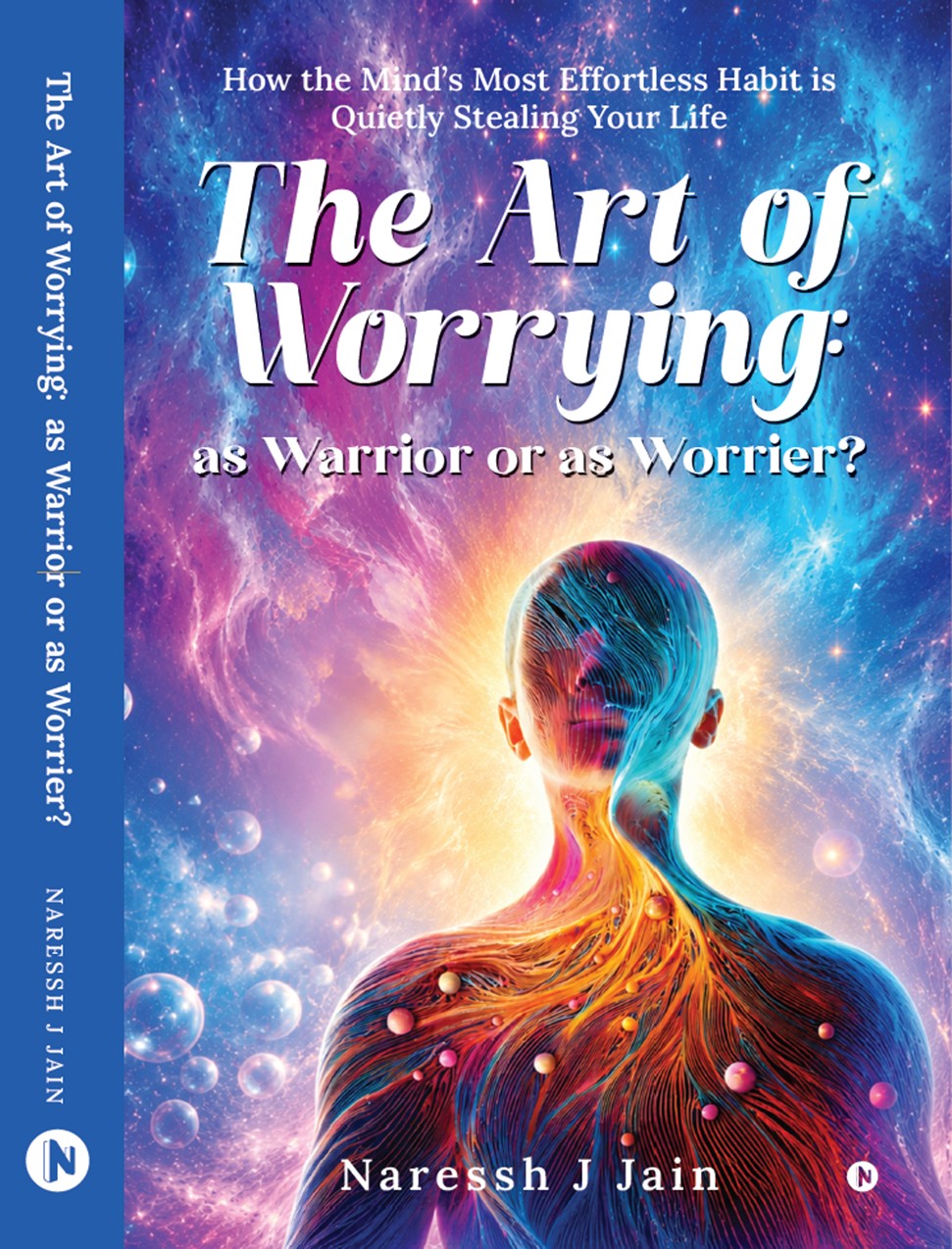
The Art of Worrying
How the Mind's Most Effortless Habit Is Quietly Stealing Your Life
Understand why worry feels so automatic. Recognise the patterns that keep it alive. Practise a calmer, more deliberate relationship with your own thoughts.
Purchase URLs for Amazon and eBook are placeholders until finalised.
FAQ
No. It explores worry across ordinary life — work, relationships, overthinking, purpose, perfectionism, people-pleasing, uncertainty, attachment and decision-making.
Not necessarily. Chapters 1–10 explore different forms and effects of worry and can be approached individually. Chapters 11–12 and the closing chapter bring the wider framework together.
No. Stories and explanatory material are paired with the recurring Feel–Deal–Heal structure, practical interventions, reflection prompts and exercises.
Yes. Readers receive access to supplementary journals, worksheets, scenarios, puzzles, reflection tools and other practical material.
No. The book is educational and intended for self-development. Significant, persistent or worsening mental-health symptoms should be discussed with an appropriately qualified professional.
The next thought will come
Recognise the signal. Pause before the reaction. Respond with awareness. Return to the life that is actually happening.
Get The Art of Worrying